IGF-1 DES 2mg
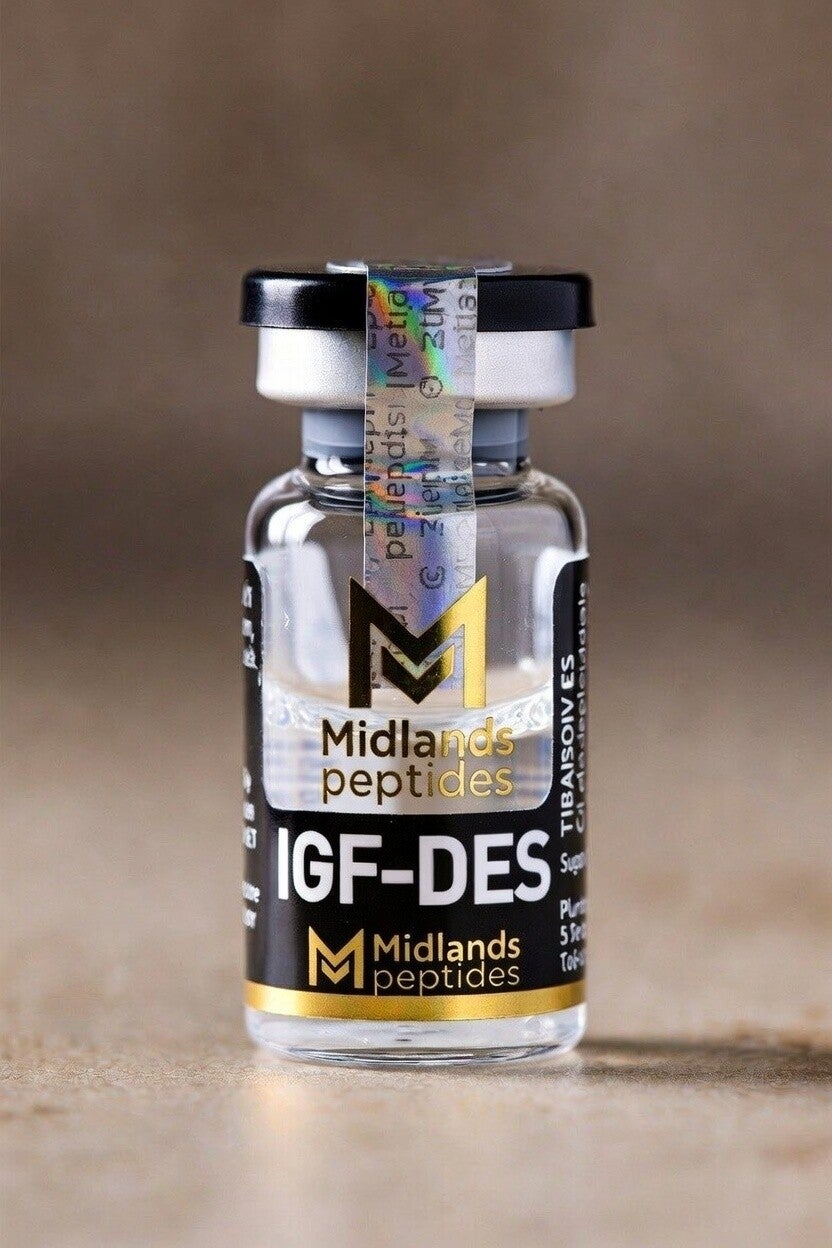
(NOT FOR HUMAN CONSUMPTION RESEARCH USE ONLY)
IGF-1 DES 2mg
(Insulin-like Growth Factor-1 DES 1-3) is a highly potent, truncated version of the IGF-1 hormone. It is approximately 10 times more potent than standard IGF-1 because it lacks three specific amino acids at its N-terminus, which prevents it from binding to IGF-binding proteins (IGFBPs) that would normally deactivate it.
Key Characteristics and Function
- Site-Specific Growth: Due to a very short half-life of 20–30 minutes, it is primarily effective at the specific site of injection.
- Hyperplasia Stimulation: Unlike regular IGF-1, which mostly increases the size of existing muscle cells (hypertrophy), IGF-1 DES is known to activate dormant satellite cells to create newmuscle fibers (hyperplasia).
- Lactic Acid Affinity: It can bind to receptors even in the presence of lactic acid, which typically blocks other growth factors during intense exercise, making it uniquely effective when used intra-workout.
Comparison: IGF-1 DES vs. IGF-1 LR3
Feature IGF-1 DES IGF-1 LR320
Half-Life. 20–30 minutes 20–30hours
Mechanism. Targeted, site-specific Systemic, full-body
Potency 10x local receptor affinity High systemic bioavailability
Best Use Lagging muscle groups/injury General mass gain
–Half-Life hoursTargeted, site-, full-body10x local receptor affinityHigh systemic bioavailabilityLagging muscle groups/injuryGeneral mass gain
Potential Research Benefits
- Muscle Repair: Accelerates recovery of damaged muscle, tendons, and ligaments by enhancing protein synthesis.
- Gut Health: Studies in animal models show it may have anabolic effects on gut tissues, suggesting potential future research for inflammatory bowel diseases.
- Immune Support: Preliminary research indicates it may boost certain immune functions by encouraging the differentiation of pathogen-killing cells.
Safety and Regulatory Status
- FDA Status: IGF-1 DES is not approved for human consumption and is sold strictly for laboratory research purposes.
- Doping Status: It is prohibited by the World Anti-Doping Agency (WADA).
- Risks: While systemic risks like hypoglycemia are lower than with LR3 due to its fast clearance, localized side effects include injection site irritation and inflammation. There is a theoretical risk of accelerating the growth of undiagnosed tumors.